Function: The ANKLE and FEET bear a lot of stress with repetitive movements and varying loads during daily activities. Activities, such as walking on uneven surfaces, climbing stairs, and running, produce great stresses about the distal lower extremities. The ankle and foot are comprised of several bones that give stability and flexibility necessary for standing and load-bearing activities. The uppermost bone in the foot, the talus, meets the bones of the lower leg, the tibia and fibula. The protrusions from these bones at their most distal and outer portions form the area that is easy to palpate and identify as the ankle. The middle or inner portion where these bones join creates a structure that is known as the ankle mortise. The talus sits under the “roof ” of these two bones. The articular cartilage that lies on the end of these bones is smooth and helps to foster movement within the joint. Here, the ankle
moves up and down.
Ankle:

floor to raise legs upward. Slowly lower.
Repeat 15 times.
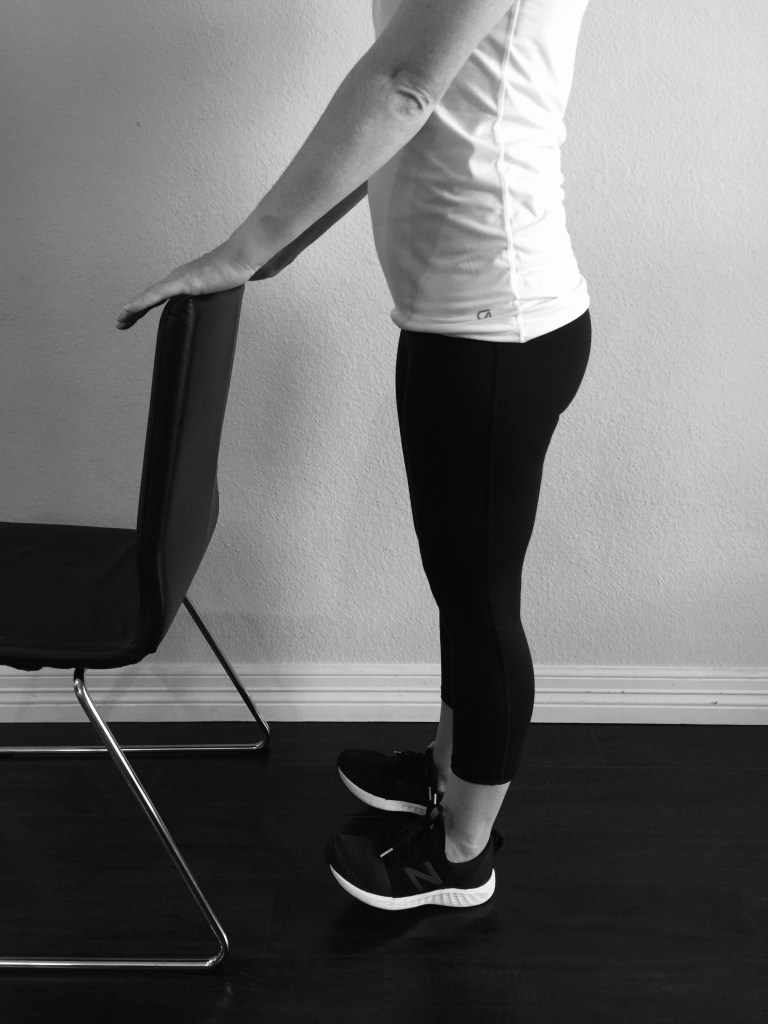
the ceiling while maintaining contact of
the heels with the ground. Slowly lower.
Repeat 15 times. **Maintain hands in
contact with support surface for safety
purposes.
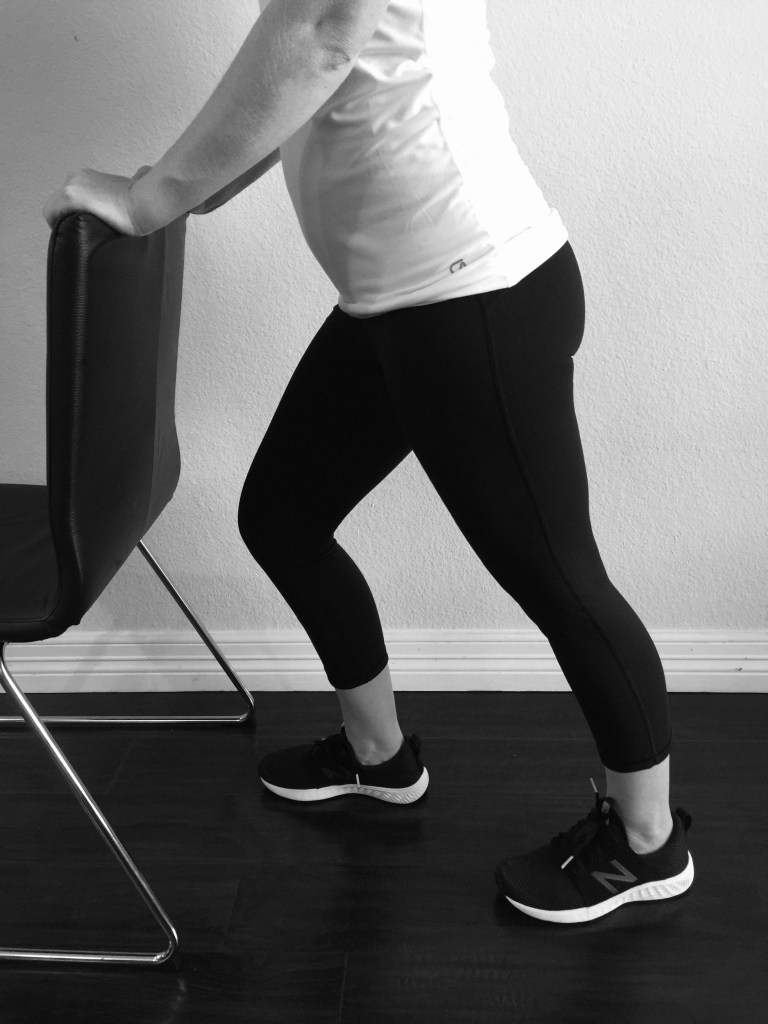
contact of the foot on the surface of the
ground and with the leg extended. The
opposite knee should bend forward
until a moderate stretch is felt on the
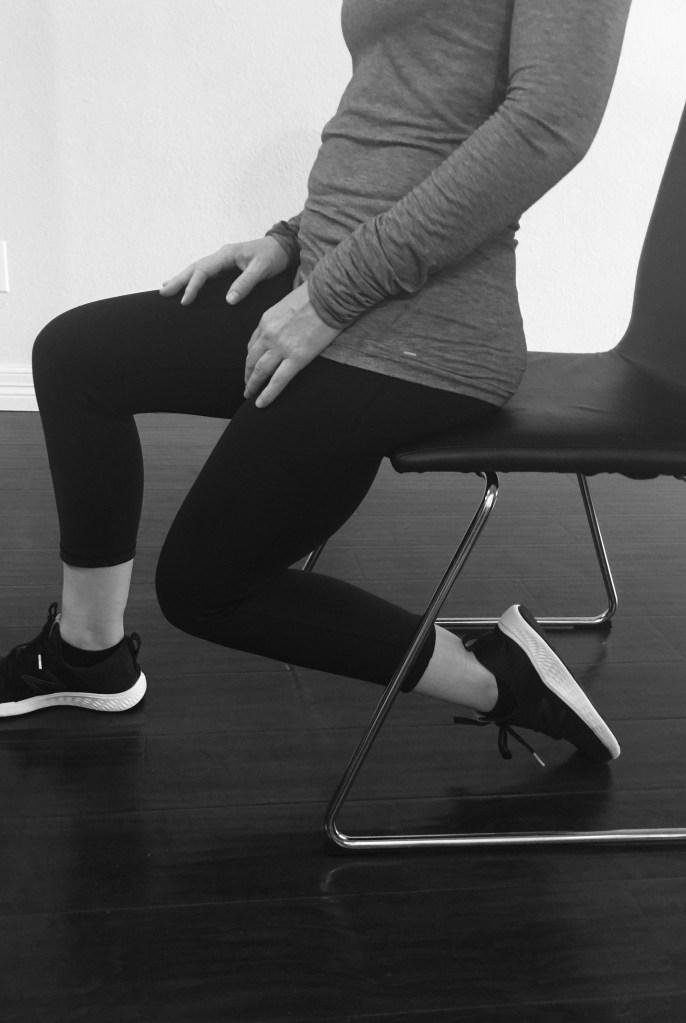
and with knee bent, rest the top of the
toes/foot on the ground. Increase knee
bend until a moderate stretch is felt
along the front of the lower leg. Hold
for 30 seconds.
Foot:
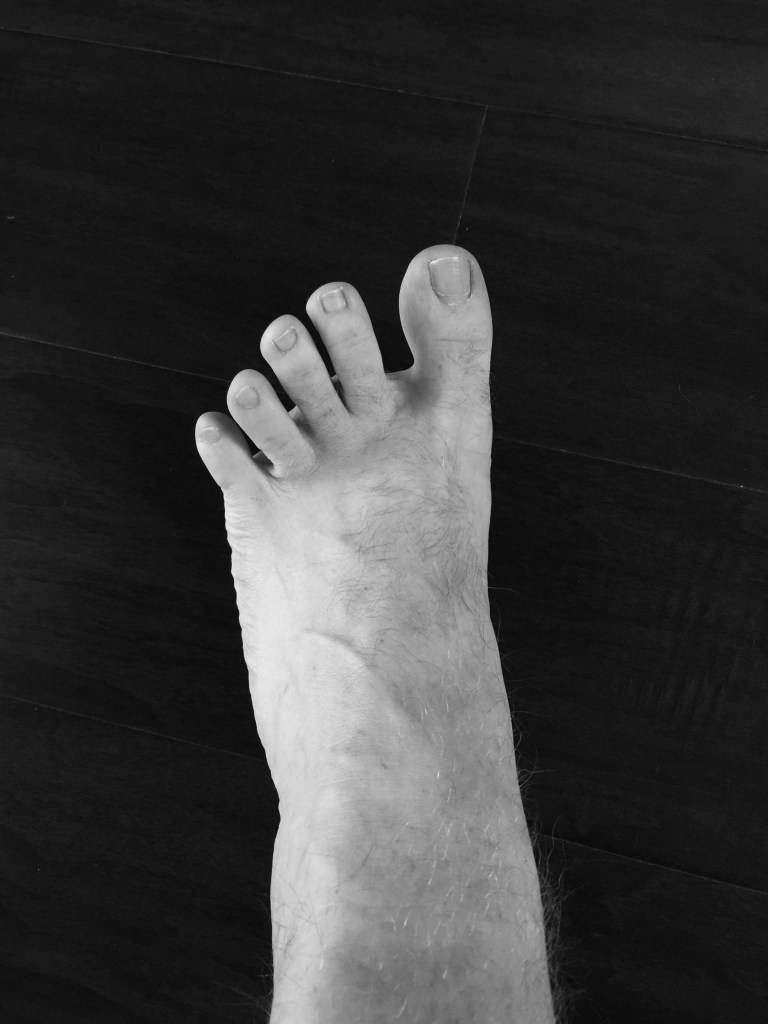
relax. Repeat 15 times.
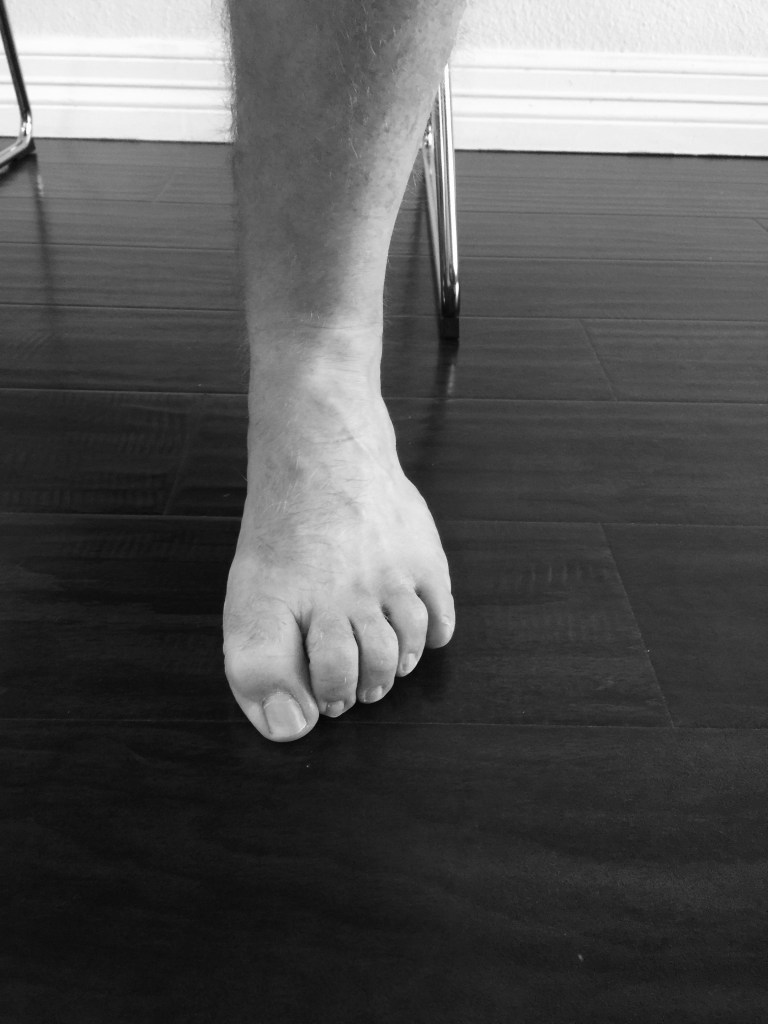
Slowly release. Repeat 15 times.
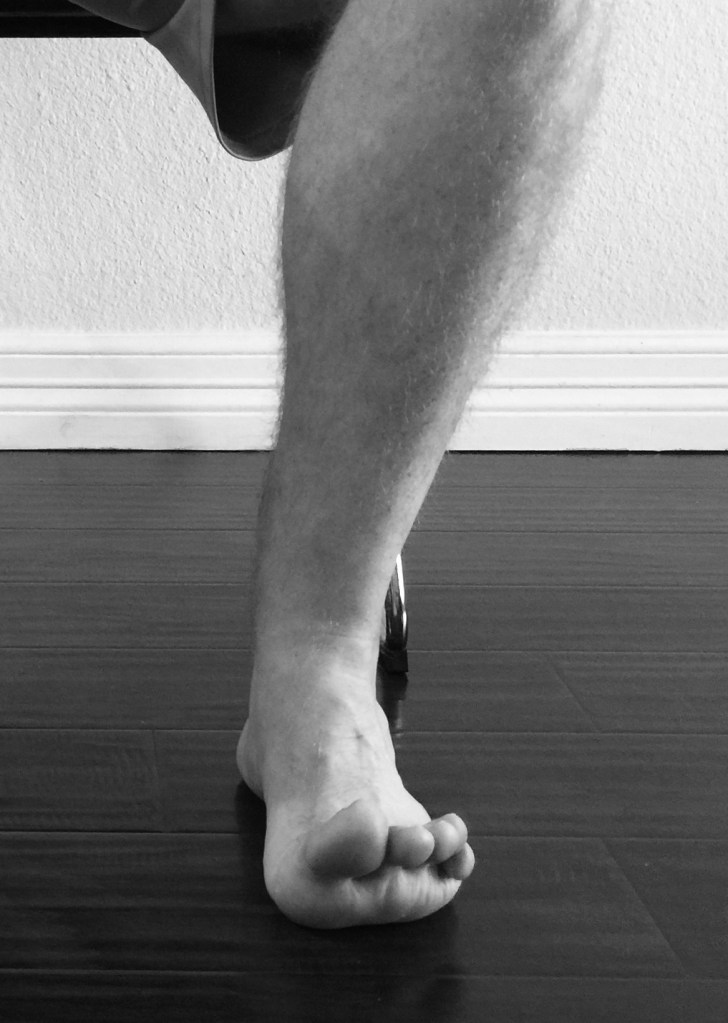
Slowly relax. Repeat 15 times.
 Exercise Simplified.